×

The Standard e-Paper
Stay Informed, Even Offline
 The Standard Group Plc is a
multi-media organization with investments in media platforms spanning newspaper
print operations, television, radio broadcasting, digital and online services. The
Standard Group is recognized as a leading multi-media house in Kenya with a key
influence in matters of national and international interest.
The Standard Group Plc is a
multi-media organization with investments in media platforms spanning newspaper
print operations, television, radio broadcasting, digital and online services. The
Standard Group is recognized as a leading multi-media house in Kenya with a key
influence in matters of national and international interest.

Audio By Vocalize
Sleep is supposed to be the time when the body switches off and rests, but the body can still be surprisingly busy while we are unconscious. We may talk, move, change positions, snore or even walk without knowing it. Sometimes, the clues only come from someone sleeping nearby who notices something we cannot hear or feel ourselves.
For some people, that discovery comes in the form of a strange, repetitive sound in the night: the grinding of teeth.
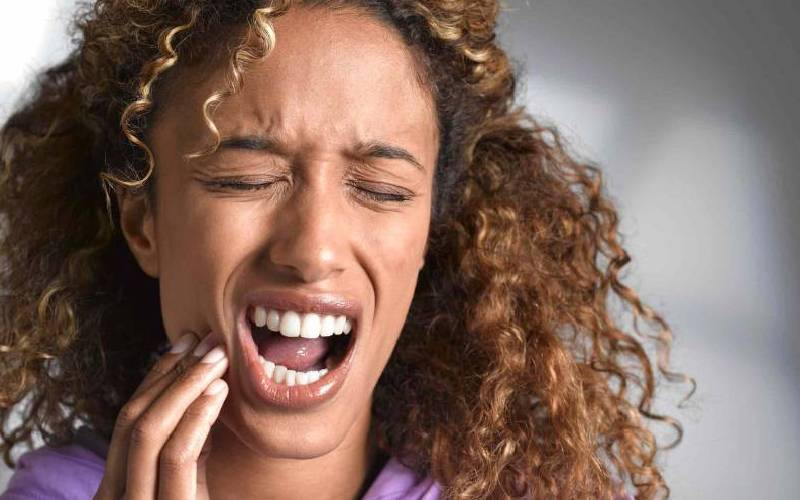
It can sound so harsh that someone listening may struggle to describe it. One person may compare it to scraping or cracking, while the person sleeping remains completely unaware. In some cases, a partner or family member is the first to notice. In others, the evidence appears later in the form of morning headaches, a painful jaw, sensitive teeth or teeth that have gradually become flattened or chipped.
There are also people who discover it through technology. Sleep-monitoring applications can record sounds made during the night, providing an unusual window into what the body is doing while the mind is switched off.
One of the conditions that can reveal itself this way is bruxism, the repeated clenching or grinding of the teeth. An international consensus defines bruxism as repetitive jaw-muscle activity involving clenching or grinding of the teeth, and distinguishes between sleep bruxism and awake bruxism.
According to Hilda Muthoni Ngacha, a dentist at Westridge Hospital, daytime bruxism can be an involuntary habit associated with stress, anxiety or deep concentration. Rather than the audible grinding associated with sleep, people may simply clench their jaws without realising it.
Night-time or sleep bruxism, meanwhile, happens subconsciously during sleep. Ngacha says it can be associated with factors including sleep apnoea and can present with audible grinding, jaw pain and headaches.
The distinction matters because a person can grind or clench their teeth without necessarily knowing it. During the day, someone may eventually notice that their jaw is constantly tense or that they are pressing their teeth together when concentrating. At night, however, conscious control is largely absent.
Dr Ian Macharia, an ENT and head and neck surgeon specialising in sleep disorders, explains that the brain briefly stirs during sleep without necessarily waking a person fully. These brief disturbances can trigger jaw activity, with grinding tending to occur during lighter stages of sleep.
This may help explain why some people notice worse symptoms after periods of poor or restless sleep.
The relationship between bruxism and sleep apnoea is particularly important. Sleep apnoea causes repeated interruptions in breathing during sleep. According to Dr Macharia, each interruption can cause the brain to briefly jolt towards wakefulness, and these arousals may trigger jaw activity. Treating the underlying sleep apnoea can therefore help reduce grinding in some people.
Bruxism is not uncommon, although estimates differ considerably depending on how it is assessed. A recent systematic review and meta-analysis estimated global sleep bruxism prevalence at about 21 per cent and awake bruxism at about 23 per cent. However, the researchers cautioned that prevalence varied widely between studies and that there was not enough data to estimate prevalence in Africa.
Children can also grind their teeth, and Dr Macharia notes that this may occur more frequently in children than adults, with many stopping as they grow older.
Several factors may increase the likelihood of bruxism. Dr Macharia points to smoking, regular alcohol consumption, some antidepressants and periods of significant stress. Ngacha also identifies high caffeine and alcohol intake, smoking, certain medicines and genetic predisposition among factors associated with bruxism in adults.
Stay informed. Subscribe to our newsletter
The effects can eventually become visible in the mouth.
“Signs and symptoms include jaw pain, teeth sensitivity, cracked, flat or chipped teeth,” Ngacha says.
Repeated grinding puts considerable pressure on the teeth and jaw. Over time, this can wear away tooth enamel, leaving teeth sensitive and vulnerable to further damage. Severe cases can result in flattened, cracked or chipped teeth, loose teeth, painful jaws, restricted mouth opening and temporomandibular joint disorders, which affect the jaw joint and surrounding muscles.
However, the jaw may also be carrying something less visible. Counselling psychologist Allan Lawrence explains that when a person experiences stress, the body’s fight-or-flight response releases hormones such as cortisol and adrenaline, increasing muscle tension. The jaw can become one of the places where that tension settles.
During sleep, when conscious control is reduced, that tension may appear as grinding or clenching.
“Bruxism does not automatically indicate a mental illness, but it can be an early signal that emotional wellbeing needs attention,” Lawrence says.
For young adults, he points to financial pressure, career competition, relationship challenges and social media comparison as some of the stresses that can keep the nervous system highly stimulated. Going to bed with an overstimulated mind rather than a relaxed one may make it harder for the body to fully unwind.
That does not mean every person with bruxism is anxious, depressed or psychologically distressed. Rather, stress can be one piece of a much bigger picture. International reviews have found associations between bruxism and factors including alcohol, caffeine, tobacco and some psychotropic medicines, while the strength of individual associations varies across studies.
So how do you know you may be grinding your teeth if you sleep alone?
A partner or family member may hear it, but morning jaw pain, headaches, tooth sensitivity, worn or chipped teeth and a tight or clicking jaw can provide clues. Dr Macharia advises people not to ignore these signs because continued grinding can cause significant dental damage.
Diagnosis usually begins with a clinical assessment of symptoms and signs. More specialised assessment can involve monitoring jaw-muscle activity during sleep, although bruxism is not diagnosed simply because someone occasionally clenches or grinds their teeth. Current international guidance treats it as a behaviour that exists along a spectrum rather than automatically as a disease in itself.
Treatment depends on the individual and the underlying factors. A dentist may recommend a custom-made night guard to protect the teeth from damage. Ngacha says behaviour modification and stress reduction can help with daytime bruxism, while addressing an underlying airway problem is important where sleep apnoea is involved.
Dr Macharia also recommends reducing alcohol and caffeine, particularly in the evening, and finding ways to wind down before bed. For persistent cases, he says other treatments may be considered, including injections into the jaw muscles, while treating sleep apnoea can be particularly helpful when it is contributing to the grinding.
For Lawrence, however, protecting the teeth is only part of the solution.
“Bruxism reminds us that the body and mind are constantly communicating,” he says.
Sometimes the first step is simply paying attention to what the body is saying, even when it speaks in the middle of the night.








Subscribe to our newsletter and stay updated on the latest developments and special offers!








 join
join