×

The Standard e-Paper
Home To Bold Columnists
 The Standard Group Plc is a
multi-media organization with investments in media platforms spanning newspaper
print operations, television, radio broadcasting, digital and online services. The
Standard Group is recognized as a leading multi-media house in Kenya with a key
influence in matters of national and international interest.

Audio By Vocalize

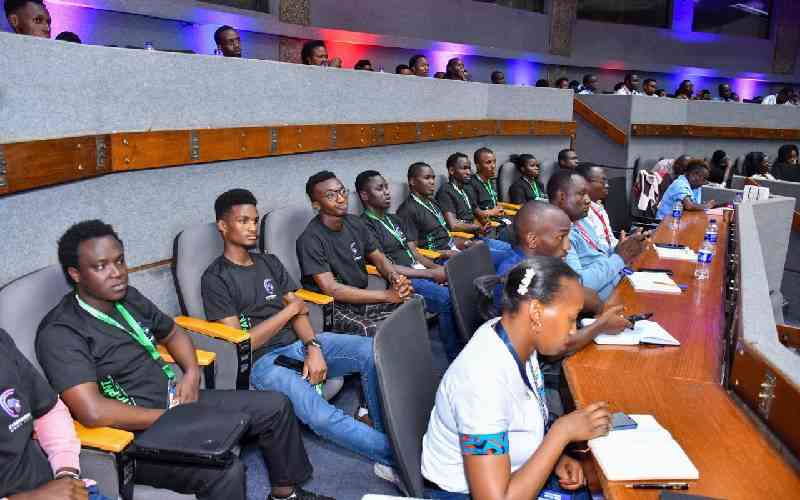
Participants during the launch of a report by the Grassroots Disability Agenda in Nairobi. [James Wanzala, Standard]
Persons with disabilities in pastoralist communities face interconnected barriers involving the cost of devices and data, unreliable connectivity and electricity and inaccessible digital platforms.
They also face limited access to structured digital-skills training, inadequate assistive technology and exposure to online fraud, harassment and privacy risks.
This is according to a survey report launched on Wednesday in Nairobi by the Grassroots Disability Agenda (GDA), an Organisation of Persons with Disabilities (OPD) called, Left Offline, Left Behind: Digital Exclusion and Disability Rights in Kenya’s Pastoralist Counties.’
The landmark research report examined how persons with disabilities experience digital technology and the barriers that limit their participation in Kenya’s digital transformation.
The report covered Garissa, Kajiado and Marsabit counties and found out that being connected does not necessarily mean being digitally included.
“Digital transformation cannot be considered inclusive if persons with disabilities in marginalised communities are unable to access, understand, afford or safely use the technologies through which information and essential services are increasingly delivered,” said Jattani Waqo, executive director of GDA during the report launch at Ngong Hills Hotel, Nairobi.
Wireless Planet CEO Leonard Mabele, the academia and technology ecosystem partner of the research, said it is an eyeopener for intervention to address the situation.
“This research provides important evidence of the barriers persons with disabilities in pastoralist communities face in accessing and using digital technology. It highlights the need to move beyond connectivity and device access to address affordability, accessibility, digital skills, assistive technology and online safety,” said Mabele.
The report identifies several interconnected concerns among them affordability and infrastructure, accessibility and assistive technology, digital literacy, online safety and privacy, unequal geographical access and gaps in policy implementation and accountability.
On affordability and infrastructure, it says the cost of devices and data, electricity and charging constraints, uneven network coverage and long distances to services can limit meaningful digital participation.
Under accessibility and assistive technology, digital services and interfaces that do not accommodate different disabilities can exclude users even where connectivity is available.
On digital literacy, many participants described learning digital skills informally through relatives and peers, with limited access to structured and accessible training.
Fraudulent calls and messages, compromised accounts, online harassment and privacy risks associated with shared devices can undermine trust and participation under online safety and privacy.
Stay informed. Subscribe to our newsletter
On unequal geographical access, conditions vary within and across the three counties.
Remote settlements in Marsabit and Garissa face particular distance and infrastructure challenges, while disparities also exist within Kajiado.
And finally on gaps in policy implementation and accountability, limited awareness of disability and digital-policy commitments, gaps in disability-disaggregated data and weak institutional coordination threaten the implementation of inclusion commitments.
The research calls for involvement of persons with disabilities and their representative organisations in decisions about technology, connectivity, public digital services and online safety.
The report calls for ten practical policy actions among them for national government institutions, county governments, regulators, technology providers and organisations of persons with disabilities.
They are operationalisation of existing legal rights to accessible information and communication technologies, make Universal Service Fund investments responsive to the needs of persons with disabilities, integrate measurable digital-inclusion commitments into county plans and budgets.
Others are to make community ICT hubs functional, accessible and adequately maintained, require accessibility in the procurement and development of digital services, strengthen disability-inclusive data practices and privacy safeguards, establish accessible mechanisms for reporting digital harms and seeking assistance.
It also calls for funding of continuing digital-skills development and assistive-technology support, improvement of research, public reporting and accountability for digital inclusion and establish a national–county mechanism for coordinated implementation and review.
The recommendations call on institutions including the Communications Authority of Kenya (CA), the National Council for Persons with Disabilities (NCPWD), the Office of the Data Protection Commissioner (ODPC), relevant ICT and disability-sector government agencies, county governments and Parliament to strengthen implementation, oversight and accountability within their respective mandates.
During the event, GDA also launched AbiliSpace, an online participation and inclusion platform intended to support the voices, engagement and participation of persons with disabilities.





Subscribe to our newsletter and stay updated on the latest developments and special offers!