×

The Standard e-Paper
Kenya’s Boldest Voice
 The Standard Group Plc is a
multi-media organization with investments in media platforms spanning newspaper
print operations, television, radio broadcasting, digital and online services. The
Standard Group is recognized as a leading multi-media house in Kenya with a key
influence in matters of national and international interest.
The Standard Group Plc is a
multi-media organization with investments in media platforms spanning newspaper
print operations, television, radio broadcasting, digital and online services. The
Standard Group is recognized as a leading multi-media house in Kenya with a key
influence in matters of national and international interest.

Audio By Vocalize
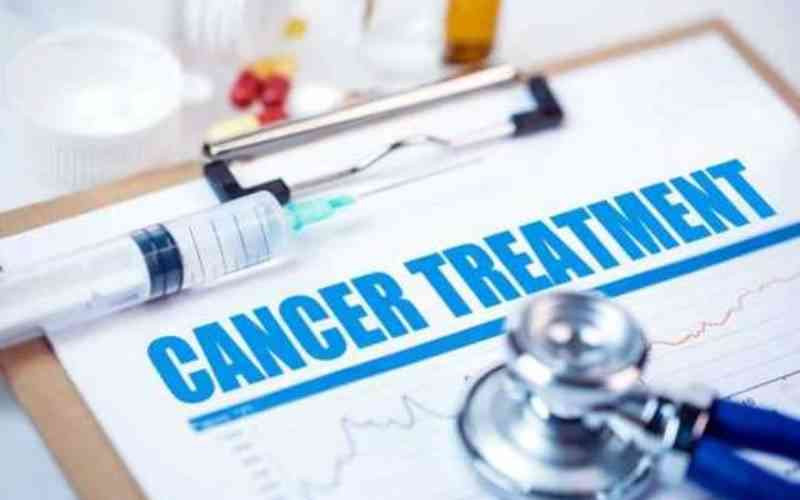
In 1941, thousands of soldiers were trapped inside Tobruk port in Libya, besieged by attacking German and Italian forces. Yet the fortress did not survive on courage alone: A fragile supply line stayed open in the Mediterranean. The harbour was the garrison’s lifeline.
The lesson? A frontline can only be as strong as the supporting infrastructure. Kenya’s fight against cancer has a weakness. Our frontline has grown stronger. We now have oncologists, nurses, specialised cancer centres, diagnostic laboratories, radiotherapy machines and advanced treatment technologies.
What runs that ‘frontline’? One answer gets little attention: Electricity. Labs need electricity. Refrigeration systems. Diagnostic tools, radiotherapy equipment, computers, communications gadgets, lighting, water pumps and critical-care machines. When the power goes out, it is not just the lights that go dark: Treatment stops. Equipment becomes unusable. Clinical workflows are disrupted. Temperature-sensitive medicines spoil. Patients miss treatment.
The grid may come back; the patient’s time does not. Also, the costs of transport, lost work, accommodation, and the emotional strain of being turned away.
Electricity reliability must be seen as part of Kenya’s cancer infrastructure and not an energy sector issue. Our power reliability has improved but still falls short of what is needed for critical services. EPRA’s 2024/25 data put the average interruption at 9.42 hours per customer, well above the 3.25-hour regulatory target; 3.57 interruptions a month on average against a 1.63 target.
For a household, these numbers describe inconvenience; for a cancer centre, operational risks. See the contradiction: Multimillion-shilling tech medical equipment and top-tier facilities are vulnerable to the stability of the power grid.
When critical cancer-treatment equipment stops working, patients don’t just lose access to a machine; they lose time. And in cancer, care time matters. Plus, the cost burden, already weighing heavily on families, is multiplied by delay due to an infrastructure failure. For a patient from far away, a cancelled session means another trip, another day without work, and an escort. Energy reliability is not about power; it is about affordability.
The traditional solution to power cuts has been the diesel generator. But the machines are expensive: Their fuel consumption, maintenance, storage, and logistics turn power outages into recurring operational costs.
But we have sunlight, a growing solar industry and better battery-storage technology. A system can be designed to combine the national grid, solar power, battery storage and a generator into one resilient energy network. The goal is not solar versus the grid; it is solar versus the generator. Solar plus battery plus generator.
When the grid is working, the hospital runs normally; when it fails, batteries take over. Solar powers daytime and recharges the batteries. Intelligent energy management systems can prioritise which equipment must stay online. The diesel generator is a backup, not the first line of defence.
This is more than placing panels on hospital roofs. It is building energy security around needs. The first facilities to benefit should be those where power failures have grave consequences: National and county referral hospitals, cancer centres, radiotherapy units, labs, blood banks, medicine storage and critical care units.
Energy-as-a-service models, leasing, concessional financing, development grants and private-sector partnerships can help to cover the cost for hospitals while delivering long-term savings and resilience.
Good news: Kenya is moving in this direction. In 2026, the Ministry of Health announced progress on a solarisation pilot at Kenyatta National Hospital supported by the European Investment Bank. Plans are also in place to expand battery systems to other key health facilities.
Hospital solarisation should not be framed as a climate project. For a cancer patient, the first question is not whether the electricity is green; it is whether the treatment will happen. For a hospital administrator, it is whether critical services continue during a blackout. For government, whether the huge investments in healthcare infrastructure actually deliver.
A solar panel cannot cure cancer. A battery cannot replace an oncologist. A microgrid cannot be a substitute for medicine. But reliable energy can help to ensure the oncologist, the medicine, the lab and the machine can do the job.
Stay informed. Subscribe to our newsletter
Let’s make electricity part of the cancer conversation. At Tobruk, the soldiers on the front relied on a supply line, behind them. Kenya’s cancer patients should not have to rely on the power staying on. We have the sun. We have the technology. We have the expertise. What we need now is the vision to connect those resources to the places where keeping the power on means keeping treatment going.




Subscribe to our newsletter and stay updated on the latest developments and special offers!








 join
join