×

The Standard e-Paper
Kenya’s Boldest Voice
 The Standard Group Plc is a
multi-media organization with investments in media platforms spanning newspaper
print operations, television, radio broadcasting, digital and online services. The
Standard Group is recognized as a leading multi-media house in Kenya with a key
influence in matters of national and international interest.

Audio By Vocalize
The Kenya Ports Authority (KPA), in conjunction with the county governments of Marsabit and Turkana, has initiated plans to establish two key infrastructure projects, including a dry port in Moyale and a dedicated ferry service on Lake Turkana.
The move is aimed at enhancing connectivity and opening the Lamu Port South Sudan Ethiopia Transport (Lapsset) corridor to trade.
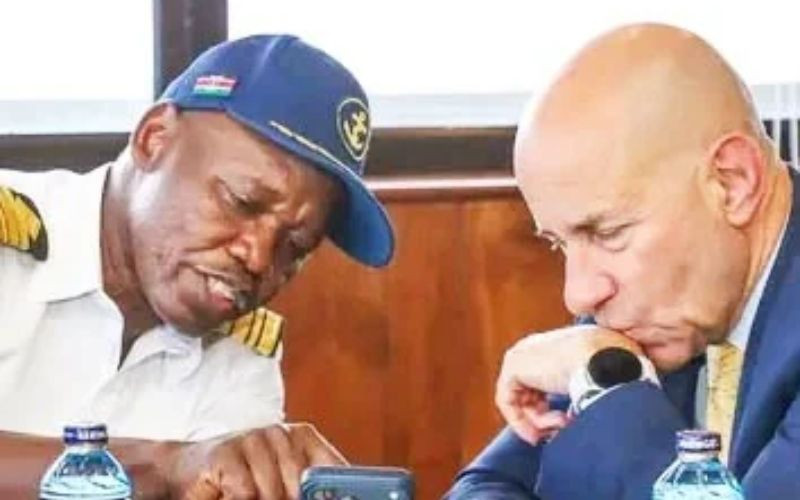
KPA Managing Director Capt William Ruto, together with Marsabit Governor Mahmod Mohamed, recently assessed the proposed sites for the construction of the dry port and modern jetty for both cargo and passenger services.
''This planned establishment of the dry port and ferry services to operate off Lake Turkana is largely part of the country's vision to spur economic growth and build trade links connecting Kenya and Ethiopia and South Sudan under the Lapsset corridor project,'' he said.
Ruto added that the plan is part of the nation's vision to develop not only urban centres along the Lapsset corridor but also broader initiatives to accelerate economic integration across the region.
Governor Mohamed lauded the government's development efforts in the northeastern region.
"The KPA delegation is in Marsabit undertaking a preliminary site assessment and route selection exercise aimed at identifying a suitable location for the construction of a ferry landing ramp, passenger holding area, shelter facilities and other critical civil infrastructure to support ferry services across Lake Turkana," the governor said.
He further noted that the proposed ferry connection between Marsabit and Turkana counties will be a game changer for the region.
''It will significantly improve transport and communication across the lake as well as facilitate the movement of people and goods, boost trade and investment, enhance access to markets and essential services, promote tourism and strengthen socio-economic integration between communities living around the expansive lake,'' he said.
He also lauded KPA for fast-tracking the proposed project, noting that it will boost economic development in Marsabit and Turkana once ferry services on Lake Turkana begin operating.
Meanwhile, Kenya has strengthened its position in international maritime governance following its re-election to the International Oil Pollution Compensation (IOPC) Funds’ Executive Committee.
The IOPC Funds are two intergovernmental organisations (the 1992 Fund and the Supplementary Fund) which provide compensation for oil pollution damage resulting from spills of persistent oil from tankers.
At the same time, Stellamaris Muthike has been re-elected to a key leadership position during meetings held in London.
The meetings, which took place from October 20-23, 2026, brought together member states to discuss the administration, financing and future of the international system that compensates victims of oil pollution from tanker accidents.
Muthike, who is the principal marine environment protection officer at the Kenya Maritime Authority (KMA), was re-elected as second vice-chair of the 1992 IOPC Fund Assembly for a fourth consecutive term.
Stay informed. Subscribe to our newsletter
"Kenya was also re-elected to the Fund’s Executive Committee, reinforcing its continued participation in decisions concerning marine environmental protection and oil pollution compensation," KMA said in a statement.
The IOPC Funds provide a financial safety net for communities, businesses and governments affected by oil spills from oil tankers.
Under the international compensation framework, shipowners are generally the first to bear responsibility for pollution damage, supported by compulsory insurance.
Where the available compensation is insufficient or cannot be obtained, the 1992 Fund can provide additional financial support, funded through contributions from oil receivers in member states.
Countries participating in the Supplementary Fund Protocol benefit from an additional compensation layer, bringing the maximum available compensation to 750 million Special Drawing Rights per incident.
The system is designed to prevent the economic and environmental consequences of major oil spills from falling disproportionately on coastal communities, fishermen, tourism operators and public authorities.
Kenya manages oil spill prevention and response through a dual framework dividing authorities between marine and inland operations, backed by recent national contingency plans and drills.
KMA serves as the lead competent authority for offshore and marine oil spill coordination, complying with the International Convention on Oil Pollution Preparedness, Response and Co-operation.
Onshore and in land waters, the National Environmental Authority (NEMA) coordinates land-based and non-navigable water hydrocarbon spills via the Onshore National Contingency Plan.



Subscribe to our newsletter and stay updated on the latest developments and special offers!